UCLA-AAUP Chapter Officers
______________________________________________________________________________
President
David Teplow (Neurology)
dteplow@ucla.edu

Dave Teplow is a Professor of Neurology in the David Geffen School of Medicine, Director of the Biopolymer Laboratory, and a member of the faculties of the Molecular Biology and Brain Research Institutes. Professor Teplow was educated at the University of California, Berkeley, the University of Washington, Seattle, and the California Institute of Technology, Pasadena. From 1991-2005, Professor Teplow was in the Department of Neurology, Harvard Medical School, Boston, where his laboratory sought to understand the pathogenesis of Alzheimer’s disease and led to his receipt of the 2003 Turken Lectureship in Alzheimer’s Disease at UCLA. Professor Teplow was a founding editor of the Journal of Molecular Neuroscience and of Current Chemical Biology. He is a member of numerous national and international scientific advisory and editorial boards, including those of the National Institutes of Health, the Wellcome Trust, the United States-Israel Binational Science Foundation, and the Yemeni Journal of Science. In addition to his focus on the pathogenesis and treatment of neurodegenerative diseases, Professor Teplow’s interests include the philosophy of science and the neuropsychological bases of creativity. Professor Teplow is committed to the protection of academic freedom and the supremacy of science (from L. scientia, “knowledge”) and its methods as the basis for the academic dialectic.
______________________________________________________________________________
Vice-President
Position Open
______________________________________________________________________________
Secretary
Susanne Lohmann (Political Science / Public Policy / Human Complex Systems)
lohmann@ucla.edu
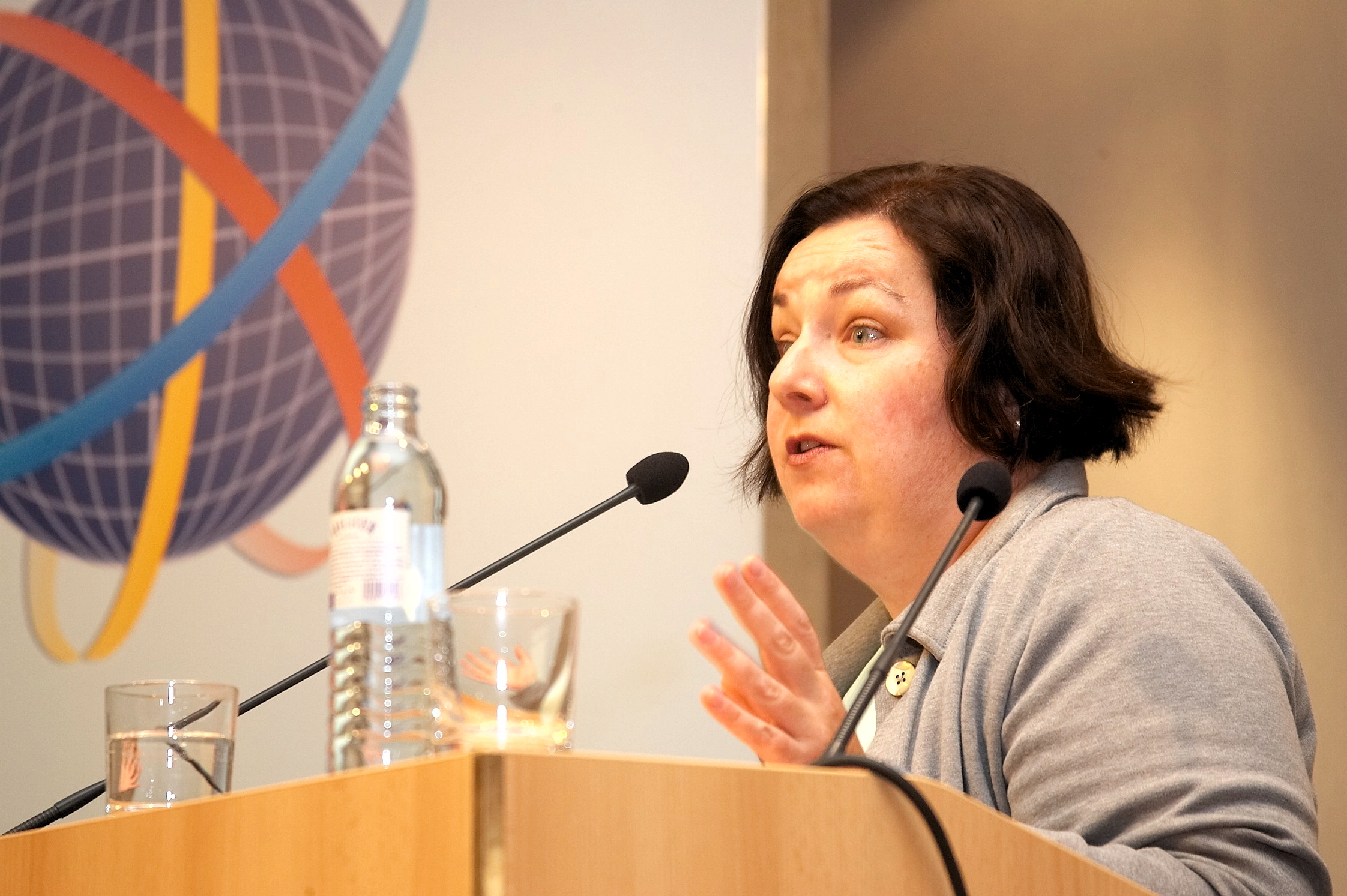 Susanne Lohmann is Professor of Political Science and Public Policy and Director of the Jacob Marschak Interdisciplinary Colloquium on Mathematics in the Behavioral Sciences at UCLA.
Professor Lohmann received her Ph.D. in economics and political economy from Carnegie Mellon University in 1991. She taught at Stanford University’s Graduate School of Business before joining UCLA in 1993. Professor Lohmann was John M. Olin Fellow at Carnegie Mellon University; Alfred P. Sloan Fellow, also at Carnegie Mellon University; James and Doris McNamara Fellow at Stanford University; John M. Olin Fellow at the University of Southern California; Fellow of the Center for Advanced Study in the Behavioral Sciences; and Fellow of the John Simon Guggenheim Memorial Foundation.
Professor Lohmann’s articles on collective action and central banking have appeared in American Economic Review, American Political Science Review, American Journal of Political Science, World Politics, International Organization, and other leading social science journals. Her current research focus is the political economy of research universities and higher education. She is completing a book titled How Universities Think: The Hidden Work of a Complex Institution, which is under contract with Cambridge University Press.
Professor Lohmann teaches courses on ethics and governance. Her online course on “Diversity, Disagreement, and Democracy” embeds mini games of cooperation, competition, coordination, and collaboration in a massively multiplayer game of life. She is the recipient of two teaching awards.
______________________________________________________________________________
Treasurer
Phil Bonacich (Sociology / Human Complex Systems)
bonacich@soc.ucla.edu

Phillip Bonacich is a retired Professor of Sociology who maintains an active research program on power in social networks. He is also a participant in the Program on Human Complex Systems.
______________________________________________________________________________
Member-at-Large
Shelley Salamensky
______________________________________________________________________________